

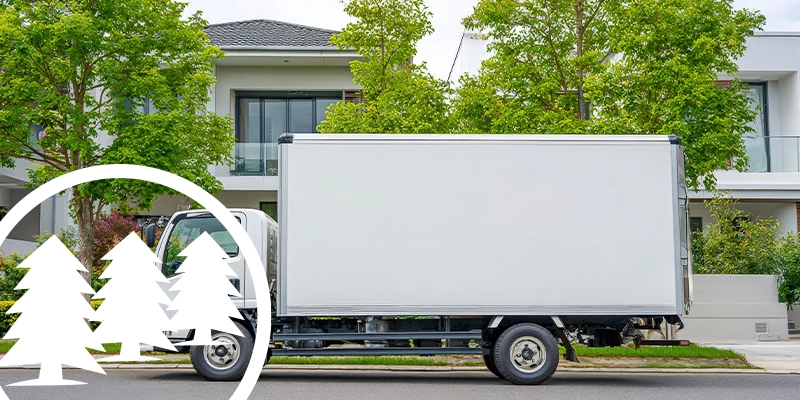
Are work trucks in HOA communities allowed? The answer depends on state laws and the governing documents. Work trucks can negatively impact a community’s appeal and property values, leading many HOAs to ban them altogether. But boards must remember the limits to their authority.
The Problem With Work Trucks in HOA Communities
The presence of work trucks in HOA neighborhoods is a common point of contention for boards and owners. Many associations restrict them because of aesthetic, safety, and space concerns. Boards wish to maintain a uniform appearance and a residential feel to the neighborhood, and work trucks can interfere with that.
Moreover, work trucks tend to be large and take up a lot of space. This can make it difficult for associations to manage tight parking situations, especially if there’s not enough space in the community to start with. In condominiums, where parking spots are assigned and carefully measured, work trucks pose problems.
Still, many residents use trucks for both personal and commercial purposes. Some owners may run their small businesses and want to take their trucks home. Others are employed by a company that loans out trucks to workers.
In any case, associations frequently implement rules that limit or prohibit these vehicles. These rules must be formal and in writing, applied to everyone evenly and fairly. Allowing one truck may encourage others to follow suit.
Can the HOA Ban Work Trucks?
 Can an HOA prohibit work trucks? It depends on state laws and the governing documents. Many associations have rules that restrict work trucks based on their commercial signage, size or weight, and attached equipment (such as ladders or racks). These restrictions typically prevent commercial vehicles and heavy trucks from parking in residential areas, thereby maintaining neighborhood aesthetics.
Board members should check their CC&Rs and bylaws for guidance. If no such rule exists, it is likely that the board lacks the authority to prohibit or restrict work trucks.
Some HOAs have a blanket restriction on “commercial vehicles.” In this case, it is important to clearly define what constitutes a commercial vehicle. Generally, any truck that has company branding, specialized equipment, or oversized dimensions may be classified as one, even if it is privately owned.
If the governing documents are silent, boards should consider amending them before enforcing such a ban on work trucks in HOA. That said, amendments typically require membership approval, so boards will need to convince owners to vote for the new rule. Educating owners on the pitfalls of work trucks is a good place to start.
What Counts as a Work Truck?
Work truck is a very broad term. What one HOA may consider a work truck, another HOA may not. For this reason, board members should clearly describe what counts as a work truck in the association’s eyes.
Typically, the key features of a work truck are as follows:
- Commercial Signage. Vehicles with company logos, advertisements, or phone numbers.
- Equipment or Modifications. Trucks that have ladders, tool racks, or large utility boxes.
- Oversized or Overweight. Large commercial vehicles, heavy-duty trucks, or vans that exceed standard size or weight limits.
Can HOA Ban Pickup Trucks?
Boards must check state laws and the association’s governing documents to know whether they have the authority to ban pickup trucks. In Florida, House Bill 1203, passed in 2024, prohibits HOAs from banning residents or guests from parking personal vehicles, including pickup trucks, in driveways or designated areas. Florida may be leading the charge now, but many other states are well on their way to passing similar bills.
While some use the terms interchangeably, a pickup truck is not the same as a work truck. A pickup truck is a broader term for vehicles that feature an open cargo bed.
Meanwhile, a work truck generally refers to a truck (often a pickup) designed for heavy-duty, commercial, or construction use. Work trucks often have stripped-down interiors, vinyl floors, and more robust suspension.
In short, a pickup truck is a type of vehicle that can be used commercially or personally, whereas a work truck refers to how the vehicle is used. That said, different communities may have contrasting definitions, even using the terms for one another.
Pickup trucks are more general, and many residents use them as their personal vehicles. People tend to like pickups because they offer more storage space and are better for lugging things around. They’re great for transporting groceries, luggage, and furniture.
For this reason, association boards should be careful when using the term “pickup truck.” Instead of banning or restricting pickups, HOAs should use “work truck” or clearly defined “commercial vehicles.”
Can I Park My Commercial Truck at Home?
 There are two things that limit an owner’s ability to park a commercial truck in their home: local zoning ordinances and their HOA. Many local laws prohibit parking large commercial trucks or semi-trucks (even trailers) in residential areas. These may include sidewalks, public streets, and driveways. Such ordinances prevent safety hazards, such as blocking the public right-of-way or reducing road space.
As for HOAs, many have rules restricting the parking of commercial trucks, especially if they exceed certain size or weight limits. Residents must check their governing documents first to avoid incurring penalties for violations.
Common Rules on Work Trucks in HOA Communities
While rules can vary from one association to another, work truck restrictions generally include the following:
1. Total Bans
Subject to applicable state laws and governing documents, an HOA may outright ban the parking of work trucks within the neighborhood. It may allow work trucks to pass through or temporarily park in certain areas, especially during authorized construction work, but long-term parking is prohibited.
2. Vehicle Size Limitations
An association may prohibit trucks with oversized dimensions. Trucks that are below the size limits may be allowed to park in the neighborhood.
3. Rules on Size and Placement of Commercial Signage
To preserve the community’s residential character, many HOAs restrict commercial signage. This applies to work trucks in HOA communities, too. If the commercial signage is too large or visible, the association might not allow it.
4. Equipment Display Restrictions
Specialized equipment, such as ladders and large utility boxes, often defines work trucks. Some associations may not allow residents to park their trucks if there’s attached equipment.
5. No Parking in Visible Areas
In a few cases, the association may allow residents to bring company trucks into HOA communities but require them to park the vehicles in the garage. With the trucks out of sight most of the time, the community’s character won’t be compromised.
Of course, boards should check state laws and the governing documents. As previously explained, in Florida, HOAs can’t prohibit residents or guests from parking their personal vehicles in driveways.
Regulating Work Trucks in HOA Communities
Work trucks can have a noticeable impact on the neighborhood. They can interfere with the community’s uniform aesthetic, undermine its residential character, create safety hazards, and limit space. Still, boards should consider their options when enacting restrictions. It’s always difficult to balance the needs of the association and the wants of residents.
Cedar Management Group provides effective management services to HOAs and condo associations, including rule enforcement. Call us today at (877) 252-3327 or email us at help@mycmg.com to get started!
RELATED ARTICLES:
- Should Towing In An HOA Community Be Allowed?
- What’s The Real Deal About Police Vehicles In An HOA Community?
- Golf Carts In HOAs: Rules, Policies, and Insurance