


When left unresolved, an HOA board tie vote can quickly turn into a deadlock, halting operations entirely. Board decisions are made by vote, so ties can occur for any number of reasons. Directors must know what steps to take when a decision can’t be reached due to a tie vote.
What is an HOA Board Tie Vote?
An HOA board tie vote means that the board is equally divided on a decision.
For example, if the board has six directors, a tie vote would have three directors voting for a motion and three directors voting against it. Because most decisions require a majority vote, a tie means the motion doesn’t pass.
What Causes an HOA Board Tie Vote?
An HOA board tie vote can result from an even number of directors, an absent director, a recused director, a vacancy on the board, or directors refusing to budge on their votes.
- Even Number of Directors. Tie votes are less likely to happen when there is an odd number of directors.
- Absent Directors. When a director isn’t present to cast their vote, the remaining directors could be evenly split.
- Recused Directors. Due to a conflict of interest, a director may recuse themselves from the vote, resulting in a tie.
- Vacancy on the Board. If the board is missing one or two seats, tie votes can happen.
- Directors Refusing to Budge. When directors are strongly divided and refuse to change their minds, the tie can lead to a deadlock.
How to Proceed with an HOA Board Tie Vote
Boards can attempt to break a tie by recounting the votes, reviewing the governing documents, reconsidering the motion, engaging a third-party professional, and addressing the root cause of the stalemate. Let’s discuss each action below.
1. Confirm the Vote Count
The first thing boards must do is verify that the vote count is accurate. Perhaps there was an error in counting, or there were duplicate votes. For board votes, this should be easy, as there are only a few votes. Election ties may be harder to break because they involve a recount.
2. Check Governing Documents
Next, the HOA or condo board must refer to the association’s CC&Rs and bylaws. These documents should tell the board how to break a tie. Often, a tie means the motion doesn’t pass because it didn’t reach the required majority.
3. Reconsider the Motion
When understanding how to break a tie vote, Robert’s Rules recommends reconsidering the motion. If the motion doesn’t get the required number of votes, it simply fails. The board can revisit the motion at another time by reintroducing it.
Perhaps then some of the directors would have changed their minds after further research, discussion, and surveys. The HOA board may also amend the proposal after deliberation and recommendations.
4. Hire a Third-Party Professional
Sometimes, the HOA board can’t resolve the tie on its own. Hiring a third-party mediator or HOA manager can help move things along. They can locate the problem, facilitate discussions, and find a compromise.
Receivership is also an option, but it is usually considered only when the board reaches a deadlock and operations stall. A receiver essentially takes over until normal operations can resume. Of course, receivers cost money, and boards lose authority over decisions during receivership.
5. Resolve the Root Cause
To break an HOA board tie vote, it is important to investigate the source of the problem. If a tie stems from a vacancy or absence, for instance, consider tabling the issue until the board is complete.
Understanding an HOA Board Deadlock
A tie vote and a deadlock are often used interchangeably, but they are not entirely the same. Tie votes happen when the board is evenly split on a motion or decision, whereas deadlocks refer to a complete state of paralysis where no decision can be made at all.
When there is a tie, operations can still typically continue. A motion simply doesn’t pass. On the other hand, when there is a deadlock, the board can’t proceed with its normal governance or operations. Everything essentially comes to a halt until the deadlock is resolved.
Can the HOA President Break a Tie?
State laws and the association’s governing documents should determine if the HOA president has tie-breaking authority.
In a board vote, the HOA president generally receives the same voting power as every other director. This usually means they get one vote. Yet, in some communities, when there is a tie, the president can break it with an additional vote, known as the casting vote.
Not every association gives its president this power. It is important to check the governing documents, particularly the association’s bylaws, to determine whether the president can break ties with an extra vote.
That said, the casting vote only comes into play in the event of a tie. It doesn’t mean that the president automatically gets two votes on all motions or proposals.
How to Resolve Tied Votes in HOA Elections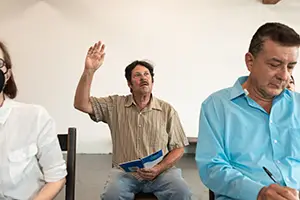
An HOA election tie rarely happens, but when it does, associations should refer to their governing documents for guidance. That said, there are some strategies that can break a tie in an election.
- Runoff Election. A runoff or special election holds another membership vote, with only the tied candidates competing for the open seat/s. This essentially takes out candidates with low votes out of the running, focusing the election on the popular choices instead.
- Reopen Voting. If some owners have yet to cast their votes, extending the deadline may help tip the scales.
- Board Decision. Depending on the bylaws, the board may have the authority to decide the tie.
- Coin Toss. In some communities, the bylaws state that tied elections can be resolved using random selection, such as a coin toss.
Keep in mind that transparency and documentation are non-negotiables. The HOA board must record everything in the minutes and keep copies of all ballots, proxies, and resolutions. Homeowners must be informed of association matters and board decisions.
Staying Compliant
Deciding the outcome of an HOA board tie vote depends on the steps outlined in the governing documents. Boards must always follow proper procedures to avoid claims of fraud, abuse of power, and invalid decisions — all of which can increase the association’s legal exposure.
Cedar Management Group provides effective management services to HOAs and condo associations. Call us today at (877) 252-3327 or email us at help@mycmg.com to get started!
RELATED ARTICLES:
- Robert’s Rules Of Order Election Of Officers Explained
- Can The Board Make Decisions In An HOA Without Consulting Homeowners?
- Is There A Minority And Majority In A HOA Board?