

One of the perks of living in a homeowners association is having access to pools, and with that comes HOA pool rules. These rules not only regulate the behavior of swimmers and guests, but they also establish what the board must do before the pool season begins.
Most Important HOA Pool Rules to Enforce
 Pools are a normal fixture among HOAs and condominiums. In fact, it’s one of the most common amenities these communities offer. While pools close for nearly half a year during the cold season, come spring, residents start itching to jump back in the water.
Before re-opening pools, boards must review the rules that support safety, cleanliness, and order. Here are the most essential swimming pool rules and regulations for HOA communities.
1. Hygiene Rules
Residents must obey basic hygiene rules to avoid contaminating the water, which can lead to health risks. Pool goers must shower before swimming and apply sunscreen that won’t cloud the water.
If someone feels sick, they shouldn’t go to the pool at all. This applies to kids, too, especially if they have diarrhea. Babies should also wear swimming diapers. Finally, swimmers must not swallow the pool water.
2. Capacity Limits
This is one of the most integral HOA pool regulations, as it ensures compliance with building codes. Boards should set a clear limit for occupancy, which can vary depending on local safety codes and pool dimensions. It’s best to consult a local regulator or a professional vendor to help establish the right limit.
3. Adult Supervision for Children
Children are one of the biggest safety risks in pools. To avoid problems, HOA pool rules should clearly require adult supervision for children below a certain age. This ensures there’s someone to monitor the kids and keep them safe at all times.
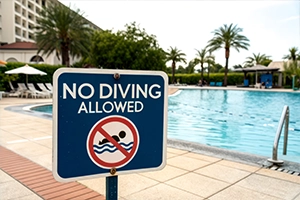
4. No Diving
Diving is only safe if the pool is deep enough. More often than not, swimming pools in HOAs don’t have enough depth to allow for diving without injury. Boards should enforce this rule strictly to avoid head trauma and neck injuries.
5. No Roughhousing
Residents go to the pool to cool down and have fun, but that doesn’t mean it’s safe to play around. Careless play, pushing, splashing, and dunking can all be risky. To prevent harm, HOA pool restrictions should include a ban on roughhousing or horseplay.
6. No Swimming While Inebriated
Residents must never show up to the pool area while tipsy or drunk. Alcohol can impair judgment and cause people to act without caution. That kind of behavior is not only a danger to other people but also to the inebriated individual themself.
7. Food and Beverage Rules
All HOA pool policies should include rules about food and drinks. Some associations prohibit food and drinks in the pool area altogether, while others allow them but with strict limitations.
A common example is banning glass containers or any kind of breakable ware at the pool. If a glass bottle breaks, the shards could injure pool goers. Other common rules include proper waste disposal and prohibiting food and drinks in the pool.
Steps for Proper HOA Pool Management
 Association boards are responsible for monitoring and maintaining the pool. Here are the strategies boards should use.
1. Inspect and Replace Equipment
Boards must schedule routine pool inspections, especially after a long period of disuse. This will spot failures or malfunctioning equipment, giving the board time to conduct repairs or replacements before the pool season begins.
Inspections shouldn’t be confined to pool equipment. Check for broken loungers, chairs, tables, and other furniture. Pool fences should also be sturdy and leave no gaps. All pool locks and gates should work properly. Pool handles, ladders, and stairs must be secure.
2. Prepare First Aid and Emergency Response
Pools come with risks. And while prevention is the better option, boards must be prepared for possible harm or injury. In general, pools should be stocked with ring buoys, rescue tubes, rescue poles, and first aid kits. It’s also a good idea to keep an automated external defibrillator (AED) on hand.
Boards should also consider hiring HOA pool lifeguards. These lifeguards can monitor the pool for safety and perform first aid or CPR if need be. Of course, lifeguards should be trained to respond to emergencies.
If a lifeguard is out of the budget, associations should post CPR instructions in the pool area. Boards can also sponsor training programs for volunteer residents. Local Red Cross chapters typically offer training sessions, but some HOA management companies also conduct them.
3. Confirm Pool Enclosure Compliance
Most states enforce strict standards for pool enclosures. In North Carolina, local counties and municipalities have their own specific requirements. For example, in Raleigh, barriers must be at least 48 inches high, with a bottom gap of no more than 2 inches.
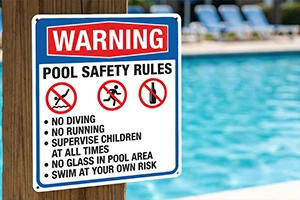
4. Post HOA Pool Rules
Board members must educate residents on pool rules. While residents can access these rules in the governing documents, they often need visible reminders around. To support this, boards should be made and posted in the pool area.
5. Hire an HOA Pool Maintenance Company
Pool maintenance demands professional assistance. Association boards can’t do it on their own, especially since most directors don’t have the skills or knowledge for it.
An HOA management company typically handles HOA pool cleaning and maintenance. If not, they have access to a network of pool vendors that can do the work for them. This vendor can manage the water quality, test equipment, and keep safety systems functional.
Documentation plays an essential role here, too. Boards should keep records of everything, including chemical treatment logs, warranties, service reports, repairs, and incident reports.
Rules That Increase HOA Pool Liability
While HOA pool rules support health and safety, boards must be wary of the type of rules they enforce. Some rules can expose the association to potential liability.
One clear example is age restrictions. Enforcing a blanket rule prohibiting children of a certain age from entering the pool may violate fair housing laws. The same can be said about restrictions on service animals.
To avoid liability, board members should carefully review their pool rules. An annual checkup helps ensure that rules still align with state and local laws. When in doubt, consulting an HOA management company or attorney is ideal.
In the End
Understanding and updating HOA pool rules is the key to a smooth pool season. Board members should do their part by reviewing these policies and following the proper steps to prepare pools in the spring. In doing so, they can protect the association and its members.
Cedar Management Group provides effective management services to HOAs and condo associations, including pool maintenance and management. Call us today at (877) 252-3327 or email us at help@mycmg.com to get started!
RELATED ARTICLES:
- Is Installing A HOA Pool Fence A Legal Requirement?
- HOA Lifeguard: Is It A Necessity Or Liability?
- Is Renting Out HOA Amenities A Good Idea?